Want a job as an Educator? Doctor? Analyst? Venture Capitalist?
Turns out that someone who wants to help fund local businesses needs the same business skills as everyone else. Marketing, design, distribution, and finance are some of the skills Novogratz says are useful for someone looking to get into a VC like Acumen. Some other tangible skills that can bring a lot to the table are medicine, education, law, and engineering to help entrepreneurs on the ground.
Now, I want to focus on Novogratz's advice. There were a good few years of my youth when I thought I would be working in the peace core in Africa, as I'm sure every kid has thought of at some point in their lives. What I didn't realize back then that I realize know is how moderately prepared I am for the real world. I'm a business student, yet almost everything I have learned (except for accounting) is theoretical. I can't really use it in real life and I probably wouldn't be able to help an African Entrepreneur much solely with my education.
That made me realize how there are still some gaping holes in our education system. Too many people my age don't know how to do their own taxes. There is no shortage of people (who aren't business majors) who don't know the difference between revenue and profit.
The point being, we need to help ourselves first in order to more effectively help others. That's not to say that anyone in Africa helping others should stop and return home until they have all of their financial statements memorized.
My point is, we need to make sure that in high school we teach our own enough so that they have enough information to make the tough decisions that can change the rest of their lives (i.e. Student Loans paid over a long time period). No person should be denied a job at a VC helping people in developing economies because their county thought that calculus was more important than a 1040. People should have the freedom and basic know-how to grab the reigns on the bull we call the "American Dream." That's why it all comes down to taking the time to teach our youth and provide them with experience (aka practice).
And that's the beauty behind business. It's a base to pave the way for any venture whether it be art, science, social entrepreneurship, or a lemonade stand. I can't wait for the days when the internet does make people more free, but for now let's help those who don't have access to the same resources.
Help us help them, help them if that makes any sense.
Monday, July 27, 2015

Friday, July 24, 2015
A Breeze of Fre$h Air
TO: Professor Clark Hansen, CEO, AMDP
FROM: Etai Evenhaim, Research & Development Analyst
DATE: July 22, 2015
SUBJECT: BreezoMeter: New Tech Investment Opportunity
I strongly recommend that Anima Mundi Development Partners consider BreezoMeter as a future investment opportunity. BreezoMeter is an Israeli startup that compiles air quality metrics from public and private organizations and lets users view air quality and main pollutants in any area. BreezoMeter is a perfect fit for Anima Mundi Development Partners because of how it has embraced the Triple Bottom Line, and is currently working with local governments in the United States and internationally to make air quality information more publicly accessible.
Company Overview
BreezoMeter’s talented environmental engineers crafted the company from a single basic need:
“Our need to know the quality of air we breathe in real time. We breathe 3000 gallons of air a day, isn’t that important?”
In 2012 Ran Korber, Ziv Lautman, and Emil Fisher were concluding or continuing their engineering studies at the Technion Israel Institute of Technology. Like most recent graduates of the Israel Defense Forces and the Technion, the founders were in their late 20s and looking to settle down with their families with the knowledge that air pollution was the leading environmental cause for premature death (BreezoMeter). BreezoMeter utilizes public data that was rarely looked at to bring air quality information to “people and businesses.” Since its inception, BreezoMeter has been featured on TechCrunch, UN, White House.
Meeting Investment Criteria
BreezoMeter embraces the triple bottom line by catering to:
- Profits: The standard measure of after-tax revenues - (cost of goods sold and operating/other costs).
- People: The direct or indirect impact on (positively or negatively) the community and consumers that results from company operations.
- Planet: The direct or indirect impact on the the local and global environment as a result of the creation, disposal, or sourcing of products.
BreezoMeter is a great investment opportunity because it has found a sustainable business model that focuses primarily on bettering the people and planet. How so? BreezoMeter provides free access to air quality information by mining big data, which will allow any person to live healthier by scheduling their lives around air quality levels. By granting this access to people, BreezoMeter is creating more environmentally-conscious consumers which can then decide where to live based on air quality. People with asthma can live in cleaner locations, and this access to information will cause people to move to cleaner areas out of necessity. Thus, dirtier areas will have to be priced at a discount and local politicians will have to make changes in that area if they want their cities to prosper. If the local governments don’t they will face bankruptcy (in the long run) and decreased property tax revenue.
BreezoMeter is not only a utility, but also a form of education which will hopefully propel it to make an immediate impact on policy and also meet profit expectations.
Corporate Social Responsibility
As a social enterprise, BreezoMeter is committed to providing a return on equity that is not merely financial. BreezoMeter and other social enterprises (both for-profit and non-profit) share a common desire:
“[To] contribute to society not only by creating jobs and driving economic growth, but by driving innovation that helps solve global challenges and make the world a better place” - Jonathan Ortmans, President, Global Entrepreneurship Week (GEW)
A great example of this in BreezoMeter’s business model is the ability for government organizations to negotiate pricing on using BreezoMeter’s data. This allows for flexibility when speaking to governments of third-world countries who may not be able to afford the same premium as the United States EPA.
It is the passion of these entrepreneurs and the dedication to corporate social responsibility that makes BreezoMeter an ideal investment. BreezoMeter adheres to stricter self regulation of legal and ethical standards to ensure that every part of the company is aligned with the greater social mission laid out by the founders.
Additionally, beyond the potential capital returns BreezoMeter has relatively no carbon footprint because it is a data provider that has little overhead. It will also help reduce the carbon footprint of countries who embrace the technology because consumers will wake up to a weather report that is coupled with air quality data. Governments will be able to check areas of higher pollution and understand correlations between traffic and certain times of the days to create more environmentally friendly road policies (similar to London’s decision to start charging fees for cars entering the downtown area) (Happy City).
Looking Forward: Clear Skies Ahead
BreezoMeter is posed for great success in its field and even the United States White House, Global Entrepreneurship Week, Forbes, and CNBC acknowledge the company’s success. BreezoMeter has been praised as one of the “20 of the world’s hottest startups” by CNBC for its revolutionary understanding of how “air pollution disperses through time and space in real time” (CNBC). As the top prize winner in the Global Entrepreneurship Week 2014 Startup Open, BreezoMeter was lauded as the kind of startup to use “the marketplace to make the world a better place.” Additionally, the United States White House honored BreezoMeter as “emerging entrepreneurs . . . who have taken on some of the world’s toughest challenges” (TimesOfIsrael).
We have discussed planning a meeting for next week and we will be able to perform some due diligence with the provided financial data from Q1 & Q2 of 2015. Please let me know your availability and I will be sure to set up a private meeting with Ziv and his team.
Closing Points
BreezoMeter is innovative not only because of the potential revenue that can be earned both in the private and public sectors, but also because of the impact it can have on the way citizens decide where to settle down. Counties and states will compete not only on job creation and tax benefits, but also by quality of air. BreezoMeter will also play an important role in the “‘Quantified Self’ revolution” that wearables have ignited (TechCrunch).
I know you must be busy, but a meeting with this startup could help us get a footing in their Series A round and provided they ‘exit’ in a few years, our reputation will be better known as a major player in the Social Enterprise sector of VC.
References
20 of the world's hottest start-ups of 2014. (2014, November 17). Retrieved July 25, 2015, from http://www.cnbc.com/2014/11/17/20-of-the-worlds-hottest-start-ups-of-2014.html?slide=5
About Us | Breezometer. (n.d.). Retrieved July 20, 2015, from http://breezometer.com/about-us/
Heubl, B. (n.d.). New Technology And Big Data Help You Breathe Fresh Air. Retrieved July 23, 2015, from http://techcrunch.com/2014/11/04/new-technology-lets-you-breathe-fresh-air/
Marich, M. (n.d.). Nov. 16-22, 2015. Retrieved July 20, 2015, from http://www.gew.co/blog/breezometer-real-time-air-quality-map-takes-top-prize-startup-open
Montgomery, C. (2013). Happy city. Toronto: Doubleday Canada.
Shamah, D. (n.d.). Israeli pollution app entrepreneurs to be feted at White House. Retrieved July 22, 2015, from http://www.timesofisrael.com/israeli-pollution-app-entrepreneurs-to-be
-feted-at-white-house/
Monday, July 20, 2015
"I was just trying to help" - Social Responsibility 2
When Novogratz first arrived in Africa, some of the female members of the local African community shunned her as an outsider. Why do we need a white foreigner helping us with the work that a local woman could do?
Well... she does have a good point. But, at the same time there are expertise and resources that a trained foreign consultant brings to the table. They tend to have a formal education and experience working on projects that local community members may not have known exist.
On another note, I have definitely felt out of place when trying to volunteer at a local non profit, as I can't really sympathize with many of the problems that the people living and/or working at the nonprofit have been through. I didn't have a tough upbringing and I can't really relate to discrimination.
BUT, while all of that is true, I am a soldier willing to fight for any cause I believe in. It may be awkward at first, but if you know that you are genuine in your actions and are not helping because you 'have to' or you 'should,' then it should not be hard to convince anyone that you are there because you want to be there.
That was the case for Novogratz, and even though those tensions never completely disappeared, she earned the right to be there. She earned the respect of the women in those community because those women also understood that she didn't have to be in Africa. She could be elsewhere, but she was in Africa and she made it her mission to bring about change.
Ultimately, it isn't always simple to sympathize with the plights of others, but if you are ready to work hard and work for what you believe in people will get behind you and support you if your motivations are genuine. It was great to see how Novogratz became a leader in her field and showed how hard work, passion, and a bit of luck can help anyone pave the way for change.
Well... she does have a good point. But, at the same time there are expertise and resources that a trained foreign consultant brings to the table. They tend to have a formal education and experience working on projects that local community members may not have known exist.
On another note, I have definitely felt out of place when trying to volunteer at a local non profit, as I can't really sympathize with many of the problems that the people living and/or working at the nonprofit have been through. I didn't have a tough upbringing and I can't really relate to discrimination.
BUT, while all of that is true, I am a soldier willing to fight for any cause I believe in. It may be awkward at first, but if you know that you are genuine in your actions and are not helping because you 'have to' or you 'should,' then it should not be hard to convince anyone that you are there because you want to be there.
That was the case for Novogratz, and even though those tensions never completely disappeared, she earned the right to be there. She earned the respect of the women in those community because those women also understood that she didn't have to be in Africa. She could be elsewhere, but she was in Africa and she made it her mission to bring about change.
Ultimately, it isn't always simple to sympathize with the plights of others, but if you are ready to work hard and work for what you believe in people will get behind you and support you if your motivations are genuine. It was great to see how Novogratz became a leader in her field and showed how hard work, passion, and a bit of luck can help anyone pave the way for change.
Friday, July 17, 2015
God bless... uh.. uh.. Oh Yeah America
http://techcrunch.com/video/new-reddit-policies-take-stance-against-harassment-crunch-report/518949582/
Freedom of Speech.
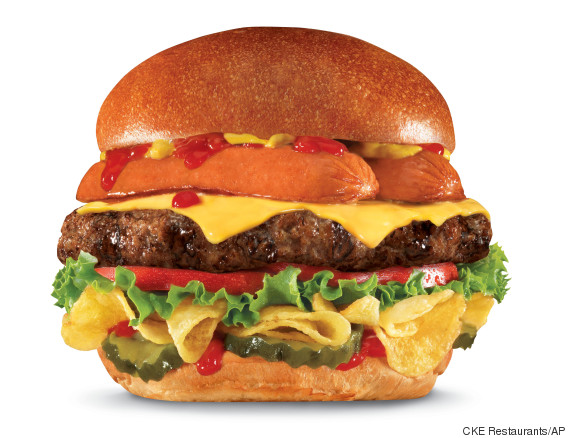
It's the most American thing right after Amendment "Tres" (that's Spanish for "three" if Donald Trump is reading this). The only thing quite as a American is Carl Jr's "American Hamburger" featuring a hot dog that sits on a grilled patty sitting on top of potato chips. If that doesn't spell out America to you, you probably shouldn't be here.

It's plain and simple. Well actually it isn't always.
Free speech teeters on a line between "Chill & No Chill" most of the time. Especially in an environment like Reddit, where anyone from anywhere can speak their minds with virtually no repercussions.
That being said, I have always been a strong proponent of prohibiting hateful or violence inciting speech (but how do you measure that?). After the current CEO, Ellen Pao was forced to resign management became a lot less lenient and brought down the hammer.
People will say the KKK has the right to say whatever they want as long as they legally book a venue or parade and don't actually commit any acts of violence. Legally, they are correct. I still think those people are idiots because the KKK has no place in our society. We are the world's most powerful nation for Christ's sake.
Then you have critics who are to extreme and any reference which could be interpreted as potentially racist or prejudiced. I'll give you an example.
African American basketball player breaks away for a dunk right after crossing over the defending point guard.
Friend 1: "Man they are so good these days"
Friend 2: "Black Athletes?"
Friend 1: "No... basketball players."
Granted, some people may have meant that the subject was 'black athletes,' I personally feel that too many people get caught up in the nitty gritty parts of conversations.
The Dilemma
So where do we draw the line? I have no f**king idea and I don't think anybody else does either. These things are decided on an organization by organization basis and I don't know where I stand.
I think we are sometimes too open when it comes to racist and hurtful speech, but I also think we tend to be way too politically correct. We want dialogue that is open because any restrictions will tend to keep some ideas and needed conversations out of the system, but where do we draw the line?
I think this ties back to the decision of trying to decide what is good for society as a whole, yet no one person or entity is really posed to make that decision.
Freedom of Speech.
It's the most American thing right after Amendment "Tres" (that's Spanish for "three" if Donald Trump is reading this). The only thing quite as a American is Carl Jr's "American Hamburger" featuring a hot dog that sits on a grilled patty sitting on top of potato chips. If that doesn't spell out America to you, you probably shouldn't be here.
It's plain and simple. Well actually it isn't always.
Free speech teeters on a line between "Chill & No Chill" most of the time. Especially in an environment like Reddit, where anyone from anywhere can speak their minds with virtually no repercussions.
That being said, I have always been a strong proponent of prohibiting hateful or violence inciting speech (but how do you measure that?). After the current CEO, Ellen Pao was forced to resign management became a lot less lenient and brought down the hammer.
People will say the KKK has the right to say whatever they want as long as they legally book a venue or parade and don't actually commit any acts of violence. Legally, they are correct. I still think those people are idiots because the KKK has no place in our society. We are the world's most powerful nation for Christ's sake.
Then you have critics who are to extreme and any reference which could be interpreted as potentially racist or prejudiced. I'll give you an example.
African American basketball player breaks away for a dunk right after crossing over the defending point guard.
Friend 1: "Man they are so good these days"
Friend 2: "Black Athletes?"
Friend 1: "No... basketball players."
Granted, some people may have meant that the subject was 'black athletes,' I personally feel that too many people get caught up in the nitty gritty parts of conversations.
The Dilemma
So where do we draw the line? I have no f**king idea and I don't think anybody else does either. These things are decided on an organization by organization basis and I don't know where I stand.
I think we are sometimes too open when it comes to racist and hurtful speech, but I also think we tend to be way too politically correct. We want dialogue that is open because any restrictions will tend to keep some ideas and needed conversations out of the system, but where do we draw the line?
I think this ties back to the decision of trying to decide what is good for society as a whole, yet no one person or entity is really posed to make that decision.
Thursday, July 16, 2015
The Blue.. Net
I love Jacqueline Novogratz's passion. It's always refreshing to hear about someone successful who genuinely cares for the well-being of others
Her story reminds me a lot of the same thoughts and reflections that I went through as a kid:
As a young child, my family spent the night before every holiday packing food for needy people in our local community. Fortunately my dad has always been the altruistic type, or better yet, a soldier that marches into the darkness of uncertainty. He is the first to get involved in every community effort and that has definitely rubbed off on me.
One night after we finished packing food for the needy, my dad sent me with the manager of the organization to deliver leftover packages to those who couldn't come pick up the food. Those people were either working their second or third job or taking care of their young kids. We would leave the packages on the doorstep, ring the doorbell, and drive away without forcing the recipient to be confronted by the donor (us).
Why? To spare them the embarrassment. It is a basic human biological need to provide for ones family and relatives and when unfortunate circumstances prevent that, it hurts and it causes emotional pain that may be more detrimental than the physical pain of poverty.
As a young middle schooler that day stuck with me and I could still bring up flashbacks when I think back about it. There were a few years of my life when I wanted to work for the peace core and I was so embarrassed because I didn't want my parents to think of me as a bum.
That is where Novogratz has really set an example for so many social entrepreneurs. The only sustainable way to make changes in poverty and the environment are by setting up finance to encourage entrepreneurs to create organizations that will be self sufficient.
Yes, these ventures might be riskier, but they need to be taken. And that is why I love Acumen and Jacqueline Novogratz.
To give you some perspective, we either pay for cheaper products now that degrade the environment and encourage corporations to take profits out of local communities or pay later for big environmental clean up projects and welfare.
Here's an example with dummy data that will explain what I'm trying to convey:
A kW from oil costs $5 to produce
A kW from Solar costs $10 to produce
Every 5 years there is a major spill which costs X Billion to clean up and has an unquantifiable cost of damage to the local ocean environment in that are and surrounding areas. If governments were to give $5 subsidies for solar (which some do) people would be indifferent and would likely have an incentive to purchase solar. In the long run the government would save money because if the fishing industry was severely crippled in later years we would see a loss in tax revenue all across the board from fishers to distributers to restaurants and the government would pay for it then.
I know we don't like to plan ahead, but we have to or we will have no way to pay our way out of trouble. Its either we invest cash now or we invest in that net. That darn blue net.
Her story reminds me a lot of the same thoughts and reflections that I went through as a kid:
- Why isn't everyone equal?
- Why do some people suffer?
- Why are there poor people?
As a young child, my family spent the night before every holiday packing food for needy people in our local community. Fortunately my dad has always been the altruistic type, or better yet, a soldier that marches into the darkness of uncertainty. He is the first to get involved in every community effort and that has definitely rubbed off on me.
One night after we finished packing food for the needy, my dad sent me with the manager of the organization to deliver leftover packages to those who couldn't come pick up the food. Those people were either working their second or third job or taking care of their young kids. We would leave the packages on the doorstep, ring the doorbell, and drive away without forcing the recipient to be confronted by the donor (us).
Why? To spare them the embarrassment. It is a basic human biological need to provide for ones family and relatives and when unfortunate circumstances prevent that, it hurts and it causes emotional pain that may be more detrimental than the physical pain of poverty.
As a young middle schooler that day stuck with me and I could still bring up flashbacks when I think back about it. There were a few years of my life when I wanted to work for the peace core and I was so embarrassed because I didn't want my parents to think of me as a bum.
That is where Novogratz has really set an example for so many social entrepreneurs. The only sustainable way to make changes in poverty and the environment are by setting up finance to encourage entrepreneurs to create organizations that will be self sufficient.
Yes, these ventures might be riskier, but they need to be taken. And that is why I love Acumen and Jacqueline Novogratz.
To give you some perspective, we either pay for cheaper products now that degrade the environment and encourage corporations to take profits out of local communities or pay later for big environmental clean up projects and welfare.
Here's an example with dummy data that will explain what I'm trying to convey:
A kW from oil costs $5 to produce
A kW from Solar costs $10 to produce
Every 5 years there is a major spill which costs X Billion to clean up and has an unquantifiable cost of damage to the local ocean environment in that are and surrounding areas. If governments were to give $5 subsidies for solar (which some do) people would be indifferent and would likely have an incentive to purchase solar. In the long run the government would save money because if the fishing industry was severely crippled in later years we would see a loss in tax revenue all across the board from fishers to distributers to restaurants and the government would pay for it then.
I know we don't like to plan ahead, but we have to or we will have no way to pay our way out of trouble. Its either we invest cash now or we invest in that net. That darn blue net.
Friday, July 10, 2015
The Happy(ish) City
Los Angele-‘No’s

‘The train is now approaching, please beware of the closing doors.’
Beep. Beep. Beep.
A breeze of cool air flows through your navy blue suit, giving a slight hint of reassurance that you won't melt before you leave the station.
Left…
Right...
Mind the gap...
And squeeze into that cramped, hollow tube we call a subway.
That sounds pretty awful doesn’t it? You waste 10 minutes waiting for a train in a poorly ventilated underground station. Then you squeeze into a metal tube that will hopefully transport you to the right destination and will usually not be pleasant.
If you’re an Angelino, there’s a good chance you either hate every aspect of that description or love it. I happen to be one of those unusual people who would prefer a longer commute to work if I do not have to be engaged in driving.
I like to think that it’s about time that we as a people put pressure on our lawmakers, as well as ourselves to make better choices for the long term. The United States doesn’t even make the cut for top 10 nationwide infrastructures. Yet, we are the biggest economy and arguably the most advanced country in the world.
If we really want to say ‘No’ to Carmageddon twice a day, we have to be ready to sacrifice. That might mean carpooling (or UberPooling) more often and sacrificing some lanes on the freeway to cleaner public transport (which is slowly starting to happen). It might make traffic slightly worse for a few years, but greatness rarely comes without sacrifice.
“Save me Oprah.. Help me, Jesus! Help me, Jewish God! Help me, Allah! Aah! Help me, Tom Cruise! Tom Cruise, use your witchcraft on me.”
Wise words from a decent man...
Ricky Bobby may not have been the brightest man, but he sure as hell knew that we needed some saving. He always talked about “go[ing] fast,” which is something most Americans can relate to (McKay & Ferrell, 2008). Everything we do nowadays has to be faster, of higher quality, and generally better.
Movies take 30 minutes to download? Delivery isn’t here in twenty minutes? Waiting more than five minutes for that Uber. Unacceptable.
Isn’t that Funny?

Twenty years ago we would have been happy to have cell service in the few places that mattered most. We were content waiting longer for mail and other general services.
You might be thinking ‘I could literally care less, that was like forever ago.’ While that’s true, I’m glad that Americans expect so much as consumers. It prompts people like Tony Stark, I mean Elon Musk, to think of solutions that speak to the Ricky Bobby in each of us.
“I wanna go fast.” LA to SF in 45 minutes? That’s what Elon Musk’s theoretical Hyperloop could do. Now, after some engineers and scientists gave some feedback, the max speed probably hovers closer to 500 mph. The fastest bullet train is in use in China and reaches just over 302 mph. That would still mean LA to SF in an hour and LA to NY in about 5 and some change. It could be as quick or quicker than flight, while also being much cleaner and much more affordable.
The Pluses

The reason Hyperloop is truly such a big deal is that it would allow for more fluid transportation within the United States. If Hyperloop were able to save people money and time (if you include all the processing time at airports), we would theoretically be adding more value to the economy. People would be willing to travel more (granted, if the fare was affordable). We would have a better-traveled population and a more efficient and clean form of transport for: people, goods, and natural resources.
I forgot to mention that Hyperloop has the potential to be emission free. Solar panels covering the top of the tracks would power the train and help us cut down emissions as a nation.
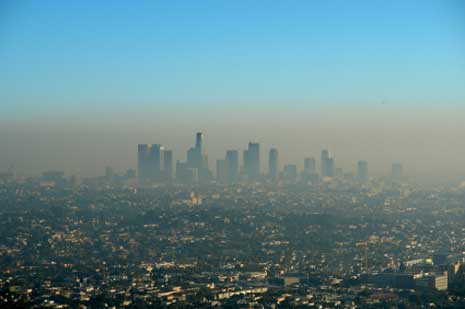
If it isn’t bad enough that we have the worst traffic in the country (Gorzelani, 2015), Los Angeles also has the most air pollution in the country (State of the Air). That being said, 27% of total greenhouse gas emissions result from transportation (Greenhouse Gas Emissions).
Los Angeles-Long Beach, CA ranked:
· #1 in Ozone levels
· #3 in Year Round Particle Pollution
· #4 in Short-Term Particle Pollution
If you want change, you have to be the change. Even if you are a total pessimist and have a lack of faith in people or society, we are on the cusp of the change. The only ingredient missing is the people who are demanding a more rapid change. We, the people, are not here to watch. We are here to play ball with the big boys. Lets start a campaign to create and invest in US infrastructure. Hell, we did it for gay marriage and civil rights.
Don’t Believe Me Just Watch


Some design firms already have ideas for what the Hyperloop would look like. Check out Argo Design’s take on Hyperloop. What’s most important is that most of the regulation prohibiting the construction and implementation of innovative technologies stem from an incompetent bureaucracy. Let’s rally the troops, and be more involved.
Don’t believe me? Take it from an urban design legend, Charles Montgomery:
“Aside from the financial burden, people who endure long drives tend to experience higher blood pressure and more headaches than those with short commutes. They get frustrated more easily and tend to be grumpier when they get to their destination.”
– Charles Montgomery, Happy City: Transforming Our Lives Through Urban Design
Investing in infrastructure isn’t only about our happiness on the road. It’s about our overall happiness and the happiness of our society. Some people spend upwards of 10% (2.4 hours) of their day LOST on the road, which seems crazy to me. Lets make that 2.4 hours GAINED on a bus or train that has fewer emissions. Catch up on TV (or sleep), Facetime with family, or get some work done while a personal (sort-of) driver takes you to your destination. So get ready, learn a little bit more, and be prepared to help prioritize policy by electing officials who plan for the long term and passing resolutions that do the same.


References
Columbia Pictures., McKay, A., Ferrell, W., Bibb, L., Baron Cohen, S., Reilly, J. C., . . . Mosaic Media Group (Firm). (2008). Talladega nights: The ballad of Ricky Bobby (Widescreen ed.). Culver City, Calif.: Sony Pictures Home Entertainment.
Gorzelany, J. (2015, March 31). Cities With the Worst Rush-Hour Traffic. Retrieved from: http://www.forbes.com/sites/jimgorzelany/2015/03/31/cities-with-the-worst-rush-hour-traffic/
Hyperloop: Concept Design for Elon Musk’s Hyperloop. (n.d.). Retrieved from: https://dl.dropboxusercontent.com/u/3788438/argodesign/HyperLoop/argoHyperloop_cw10.pdf
Most Polluted Cities - State of the Air 2014. (n.d.). Retrieved from
http://www.stateoftheair.org/2014/city-rankings/most-polluted-cities.html?referrer=https://www.google.com/?referrer=http://www.stateoftheair.org/2014/city-rankings/most-polluted-cities.html
Monday, July 6, 2015
Shrink the Economy and Encourage Real Wealth
Agenda for a New Economy definitely has me thinking quite a bit.
On one hand, shrinking the economy and encouraging real wealth by limiting the Money Supply would cause some crazy problems for liquidity, issuing debt, and would take us away from our spot as the number one economy in the world.
Korten makes some great points about how Wall Street is setup in a way to encourage greed. Free Market theory says that whenever a market has less restrictions it operates more efficiently. We've seen how Wall Street has the ability to take advantage of people, but when do we say "the buck stops here."
On one hand, shrinking the economy and encouraging real wealth by limiting the Money Supply would cause some crazy problems for liquidity, issuing debt, and would take us away from our spot as the number one economy in the world.
Korten makes some great points about how Wall Street is setup in a way to encourage greed. Free Market theory says that whenever a market has less restrictions it operates more efficiently. We've seen how Wall Street has the ability to take advantage of people, but when do we say "the buck stops here."
- What is that limit, that barrier, that cap where we start to trade utility for the greenback?
- How do we quantify the damage of an oil spill? (Is it only by cleanup costs & lost fishing revenue?)
- How do we decide when to provide bigger subsidies for electric vehicles?
- Is nuclear energy the way to go?
So many questions that we don't have a single answer for. It boggles my mind, but we don't really know how much of an impact certain policy has until it is actually implemented.
On that same topic, do we limit salaries?
My personal opinion is that I think it is offensive and selfish to be making over a certain amount of money. That being said, if I am going to risk everything and spend my life starting Alibaba or Amazon, I expect to make upwards of a few million dollars a year. If you're working 80+ hours week you should be paid more.
Yet, once you make a certain amount of money, your lifestyle does not change. Buying yachts and jets is the most wasteful act. If you really want to go on a yacht and have the money to spend rent one for a week, expense it to the company, save the money on taxes.
Where do we limit salaries is the real question. If someone works a commission based job and makes 10% on X Million $, if we put a cap we are capping business. That's something to think about. The truth is we won't really know until we try, but history and other countries have shown us that free market tends to always operate better in the long run than any other government influenced system.
Conclusion
There's a problem with how people spend money in the US and across the world. We need to stop being so wasteful as a society, even if it at the expense of some business. We are going to pay for the environment now or later, and I think it'd be much better to pay for it now and enjoy the benefits later.
Subscribe to:
Posts (Atom)